What happens when a working conversation no longer has to start from scratch every time?
At first, I wanted something quite practical.
I had watched a video in which a financial adviser spoke about building a “second brain”: a place to store procedures, decisions and information in order to work more quickly.
I thought it could also be useful to me as an artist. The idea was to create a kind of master archive so that I would not have to explain my work all over again every time I resumed a conversation with the AI.
But that was not exactly what happened.
The archive began to grow as we worked. At the end of an important session, I would say: save this. Gradually, it began to retain not only information about a work or the settings used in an edit, but also doubts, failed tests, rejected solutions and the reasons for maintaining a decision.
The earliest surviving record is dated 1 August 2026. That document already contained a rule:
“It must not save everything indiscriminately: it must organise thoughts and decisions.”
The Second Brain had to distinguish between decisions made, developing ideas, pending matters, reference materials and discarded paths. It still seemed like a professional archive, but it was beginning to contain something more difficult to classify: traces of judgement.
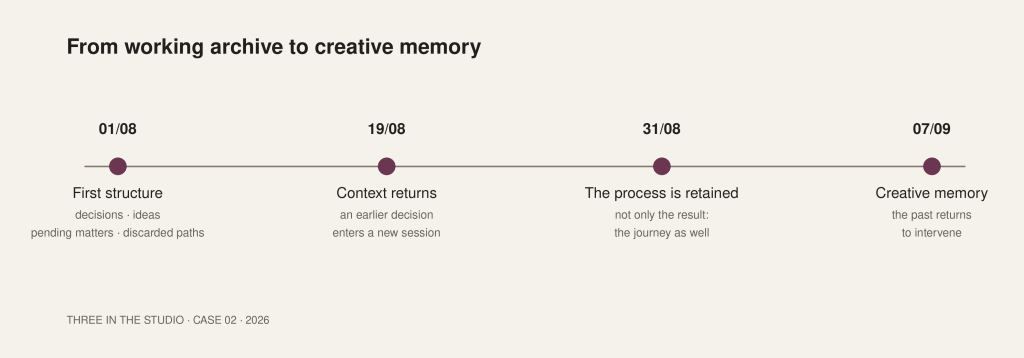
The transformation took place within the daily work.
During the reconstruction of Uso indebido (Misuse), an earlier decision could return weeks later and act as a starting point. It did not have to be repeated, but it prevented every session from beginning with a blank slate.
Later, something even more significant happened. While editing El silencio está ocupado (Silence Is Occupied), we tested a green layer to soften a transition. The solution was technically sound, but it weakened the spatial and narrative organisation of the work. It was removed.
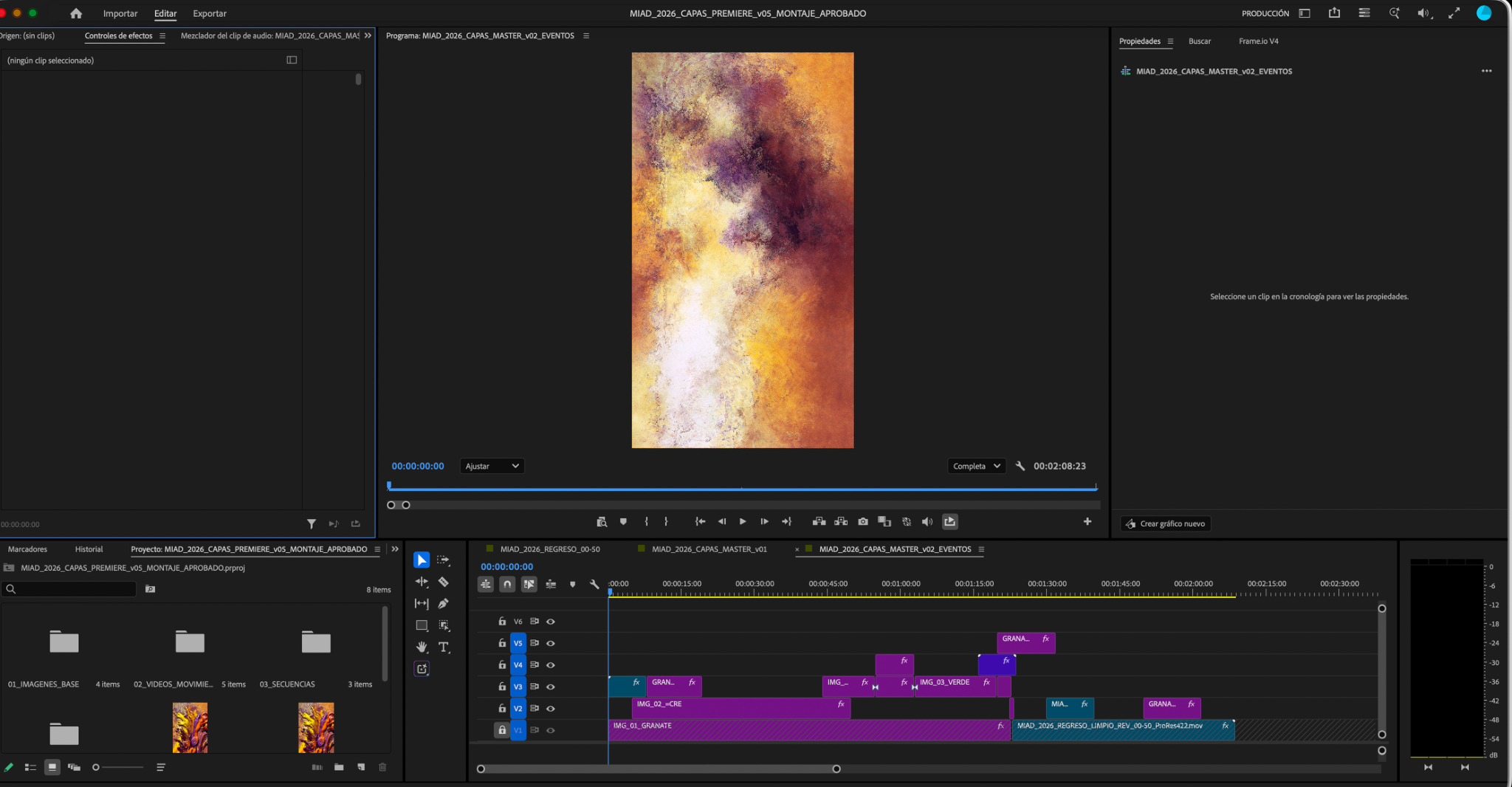
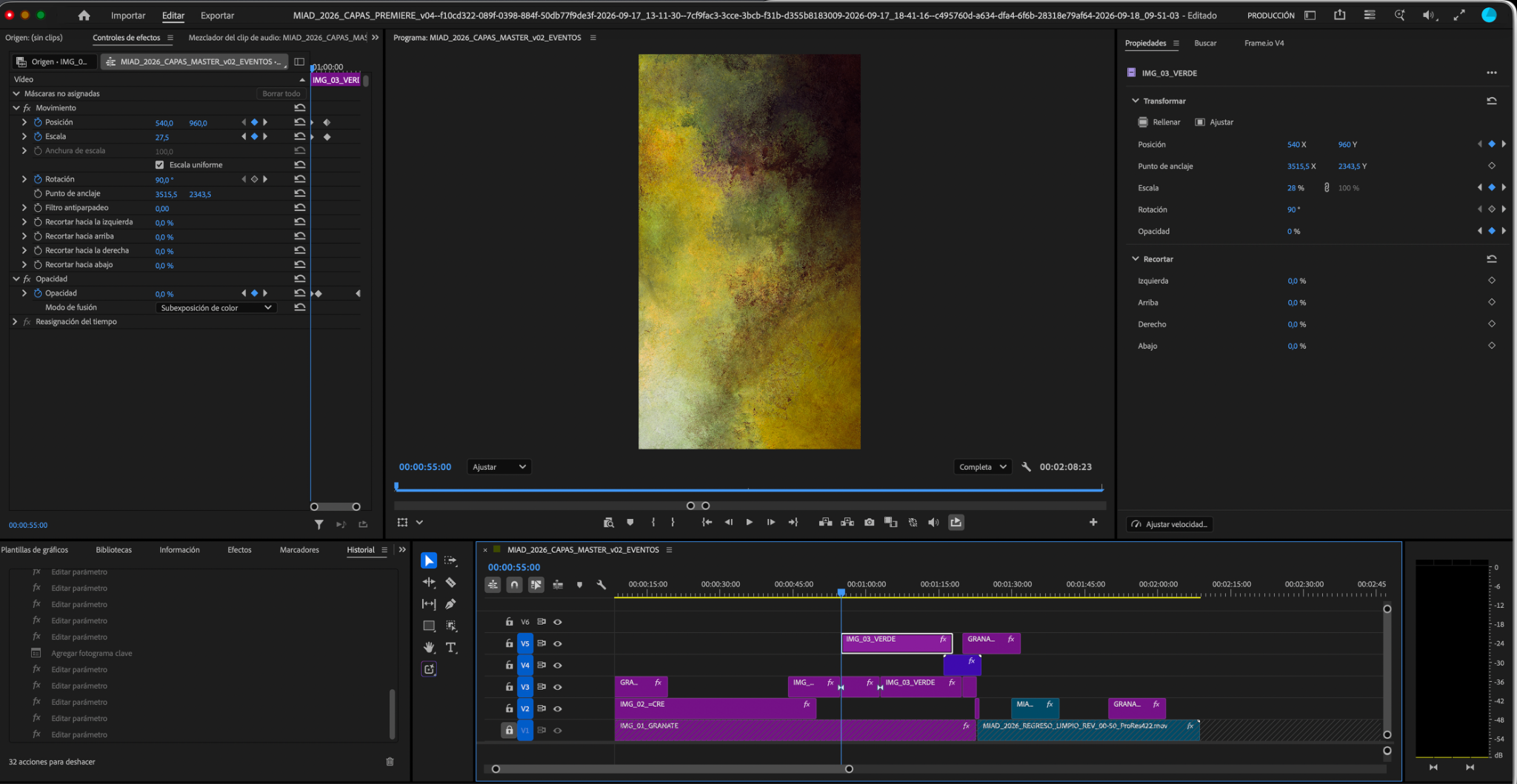
The memory retained the approved version and also the reason for discarding the other one. That layer was no longer recorded as a pending possibility, but as a test that had been carried out and rejected.
Something similar happened with an intrusive frame. The AI proposed several plausible explanations before the real cause emerged: a single-frame fragment hidden on another track. Saving only the solution would have preserved a false account of what had happened. The discarded hypotheses also needed to be remembered.
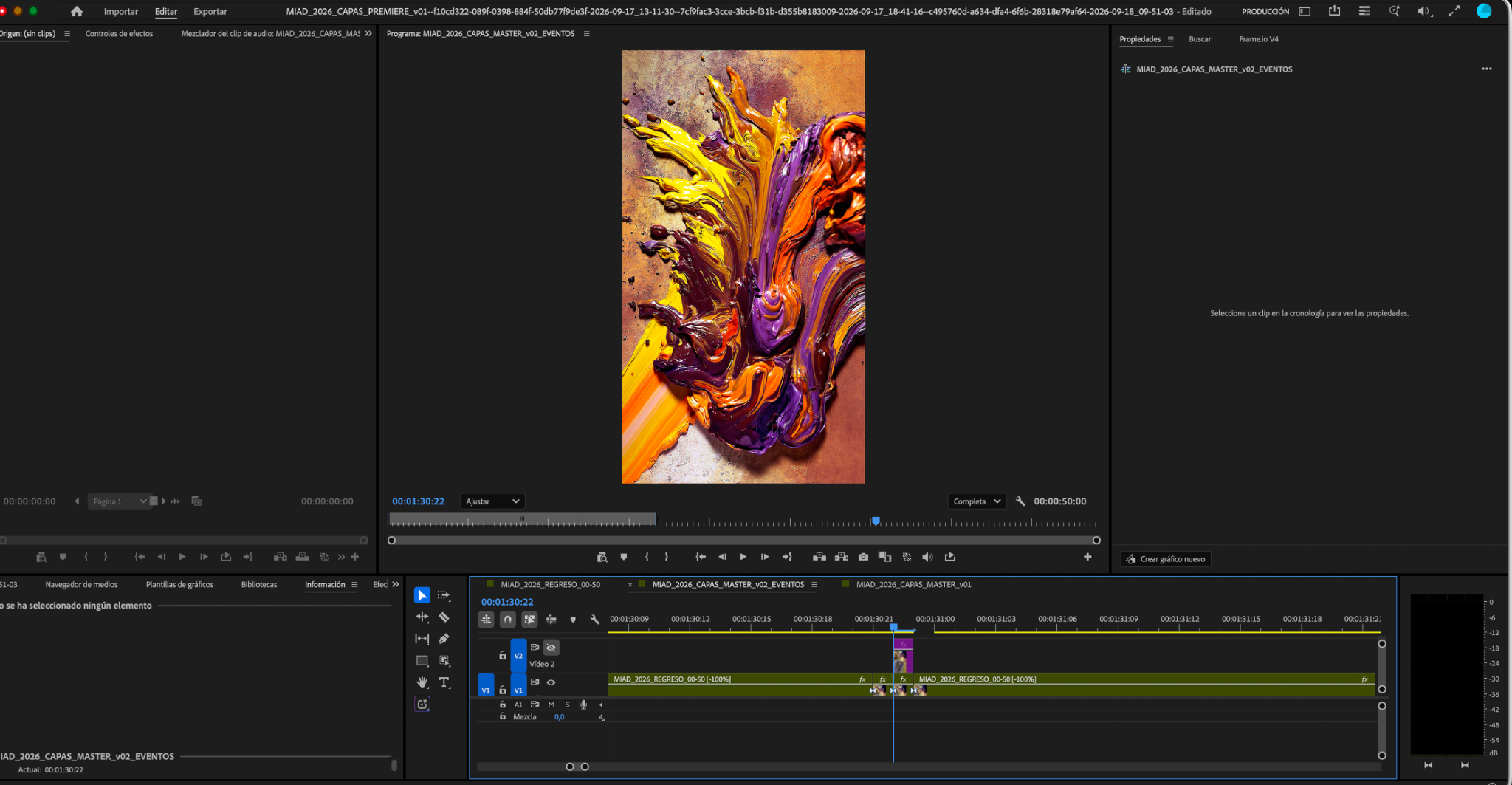
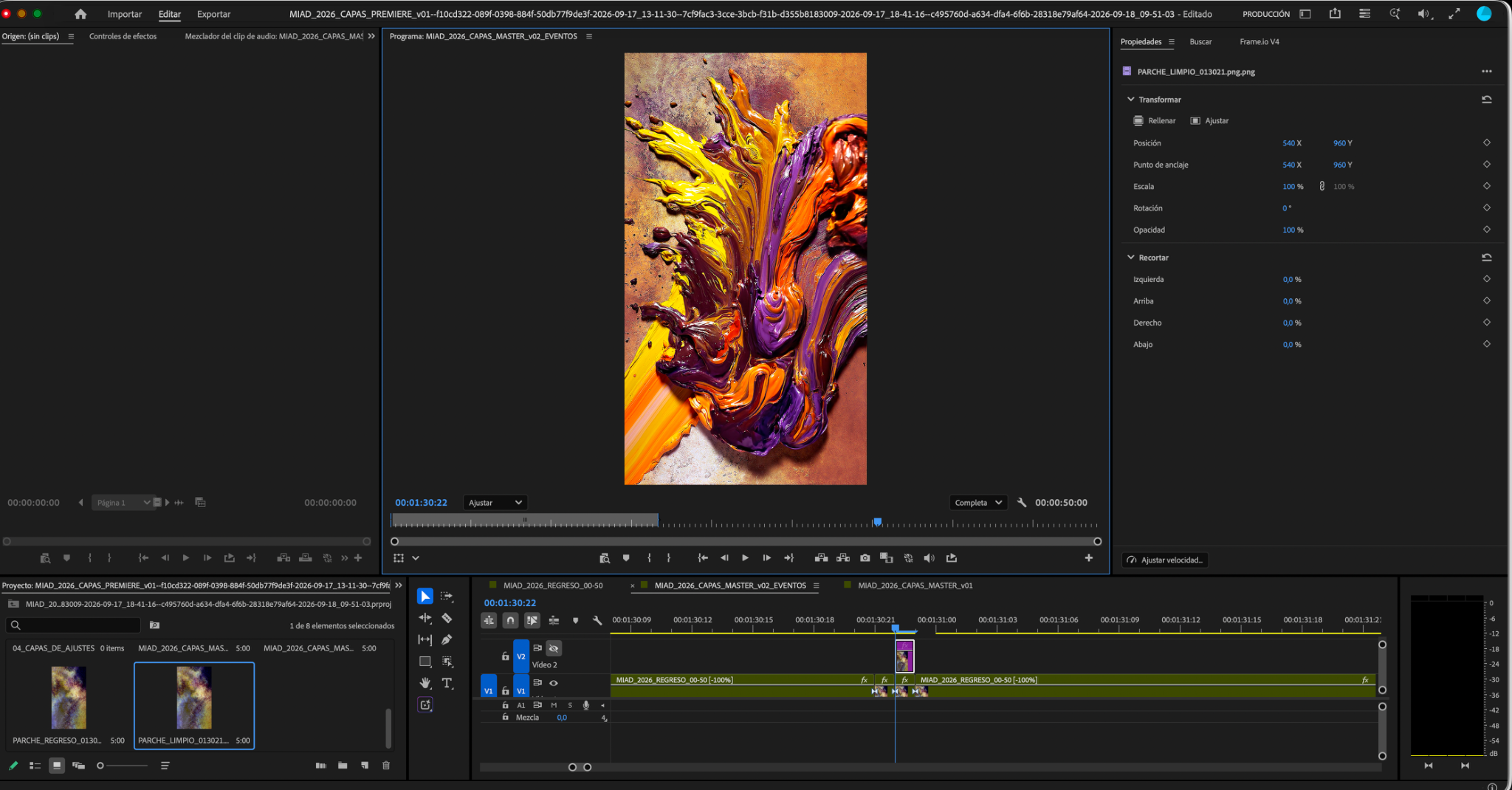
That was when I realised it was no longer merely an archive.
The Second Brain had become a creative memory: a memory built through practice, capable of bringing previous decisions back into a new conversation.
Sometimes what is remembered is useful. Sometimes it needs to be corrected. At other times, it no longer makes sense and is discarded.
Memory does not dictate. It does not replace the artist’s judgement or turn a previous decision into a rule. If it did, it would freeze the practice.
For me, that is the difference: memory is not there to obey the past. It is there so that we can argue with it.
A second reading
Seen from the outside, this story might appear to be an improvement in the organisation of the work. That improvement is real, but ultimately it is secondary.
What took place was another shift:
professional archive → memory of decisions → creative memory → context that returns to intervene
An archive can preserve titles, dates, procedures or parameters. An artistic practice also depends on something less explicit: recognising when an image loses tension, when a sound solution weakens the work or when a convincing explanation does not correspond to what is visible.
Annie Yuan’s research into tacit knowledge helps to articulate this difference. A system can store information about a person without yet understanding how that person perceives, doubts, rejects or decides.
This case does not demonstrate that the AI has acquired my judgement. It shows that, by retaining comparisons, corrections and discarded options, the memory begins to contain traces of how I decide, rather than merely information about my work.
But it is a partial memory. It can simplify, omit or misremember. It preserves words more effectively than the tone of a refusal, the uncertainty surrounding a test or the intensity with which something was perceived as wrong.
That is why it needs independent documents, human correction and the right to contradict what has been stored.
Remembering everything would be as unhelpful as remembering nothing.
To understand this is to accept that a creative memory does not preserve the past in order to repeat it, but in order to transform it.
Reference
Yuan, Annie. Tacit Signal Infrastructure: Towards AI Systems that Model Expert Sensing Over Time. arXiv:2605.24332, May 2026.
https://arxiv.org/abs/2605.24332